
Northstars
The foundational layer of the quality system. Every audit, every test, and every behavioral evaluation runs against northstars.
What are northstars?
Northstars
Are explicit, auditable rules that define what correct agent behavior looks like. They cover two dimensions: Behavioral northstars govern how an agent communicates and operates, like communication style, information handling, tool usage sequencing, and more. Business northstars are operational outcomes the agent is accountable for, like resolution on first contact, containment rate above target, correct intent classification, and more. Both are defined per agent, versioned alongside the workflows they govern, and evaluated automatically, at scale, against every sampled production session.
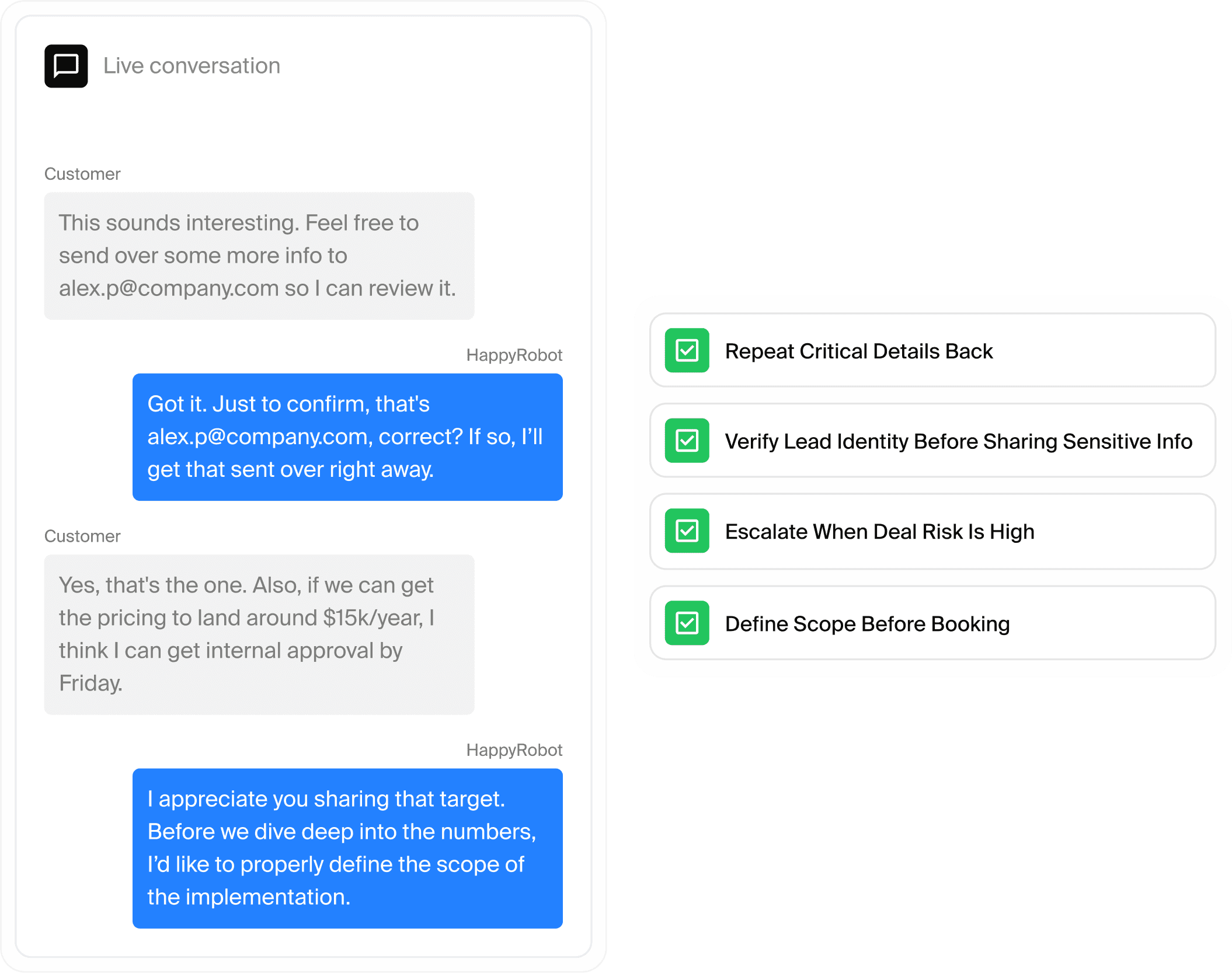
The rules governing your agent already live in its prompt and workflow. We extract them automatically as northstars, each traced to its source node, so nothing is hand-assembled or falls out of sync
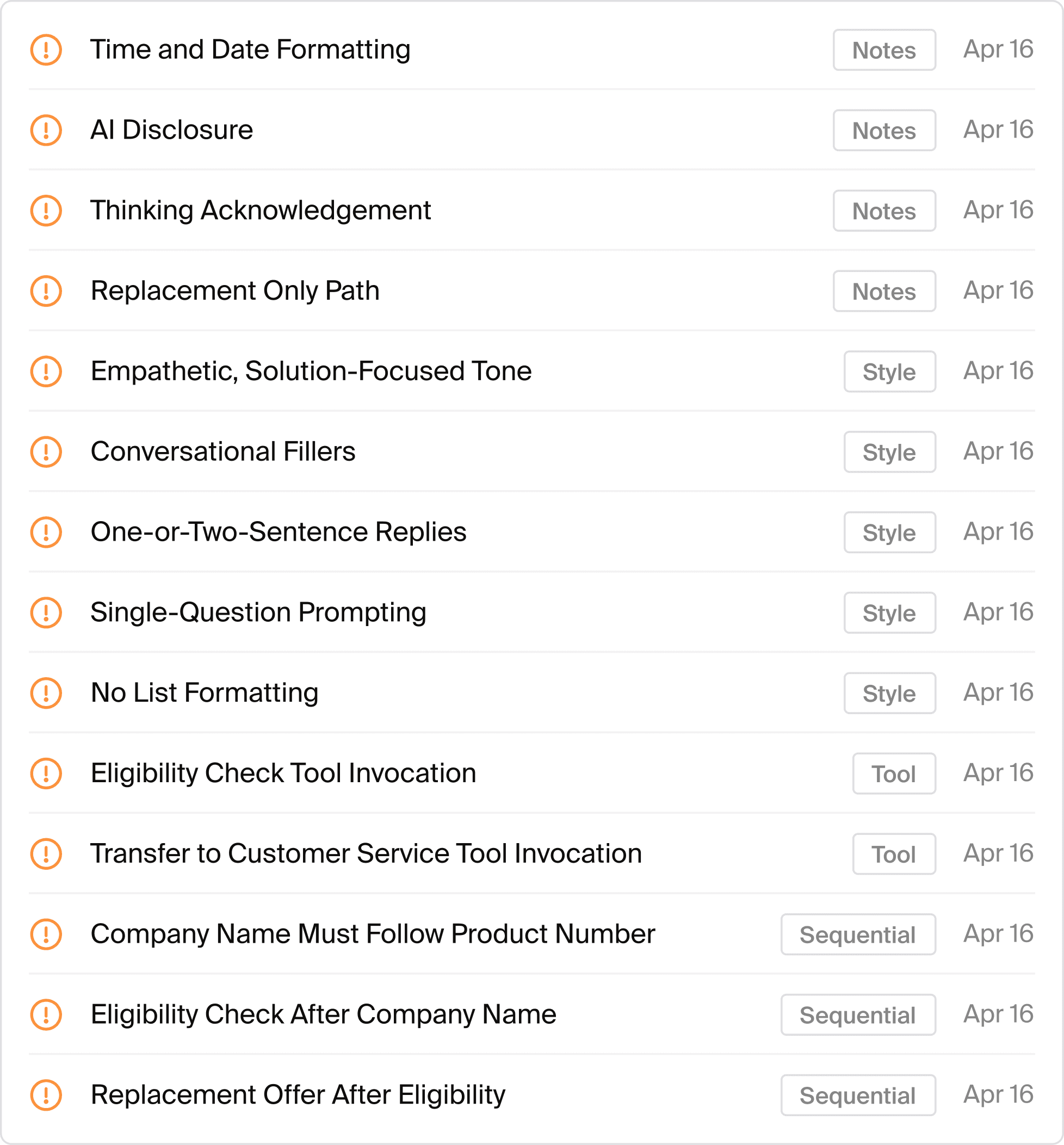
A northstar can be from one of these categories
Notes
Information the agent must retain and apply throughout the conversation, such as confirming a customer's name before proceeding, noting a preference expressed earlier in the call, carrying context across turns.
Style
Informs agent's communication tone, register, and persona, such as be professional but empathetic, be direct without being abrupt, never be dismissive of frustration.
Tool
Conditions under which specific tools must be invoked, such as always run the lookup, always verify through the system, never quote from memory.
Sequential
Required order of operations, such as verifying identity before any account action, offering a human handover only after a second failed resolution attempt.
Writing effective northstars
Be precise and checkable
A well-written northstar has a clear pass/fail condition. "Always confirm the waybill number before disclosing any shipment status" is checkable. "Handle shipment queries well" is not.
Match the category to the intent
A sequential rule written as a style rule will be evaluated incorrectly. If the rule is about order of operations, it belongs in Sequential, not Notes or Contradiction.
Set priority based on real business impact
Priority determines where your team focuses when issues surface. Reserve high priority for rules where a violation carries genuine operational, compliance, or reputational risk.
Add examples early
Don't wait for audit failures to calibrate. Add at least one positive and one negative example when creating each northstar. The evaluator uses them from the first audit onwards.