
Agentic Data
Every interaction your agents handle generates data. Here's how it gets captured, structured, and put to work.
What is agentic data?
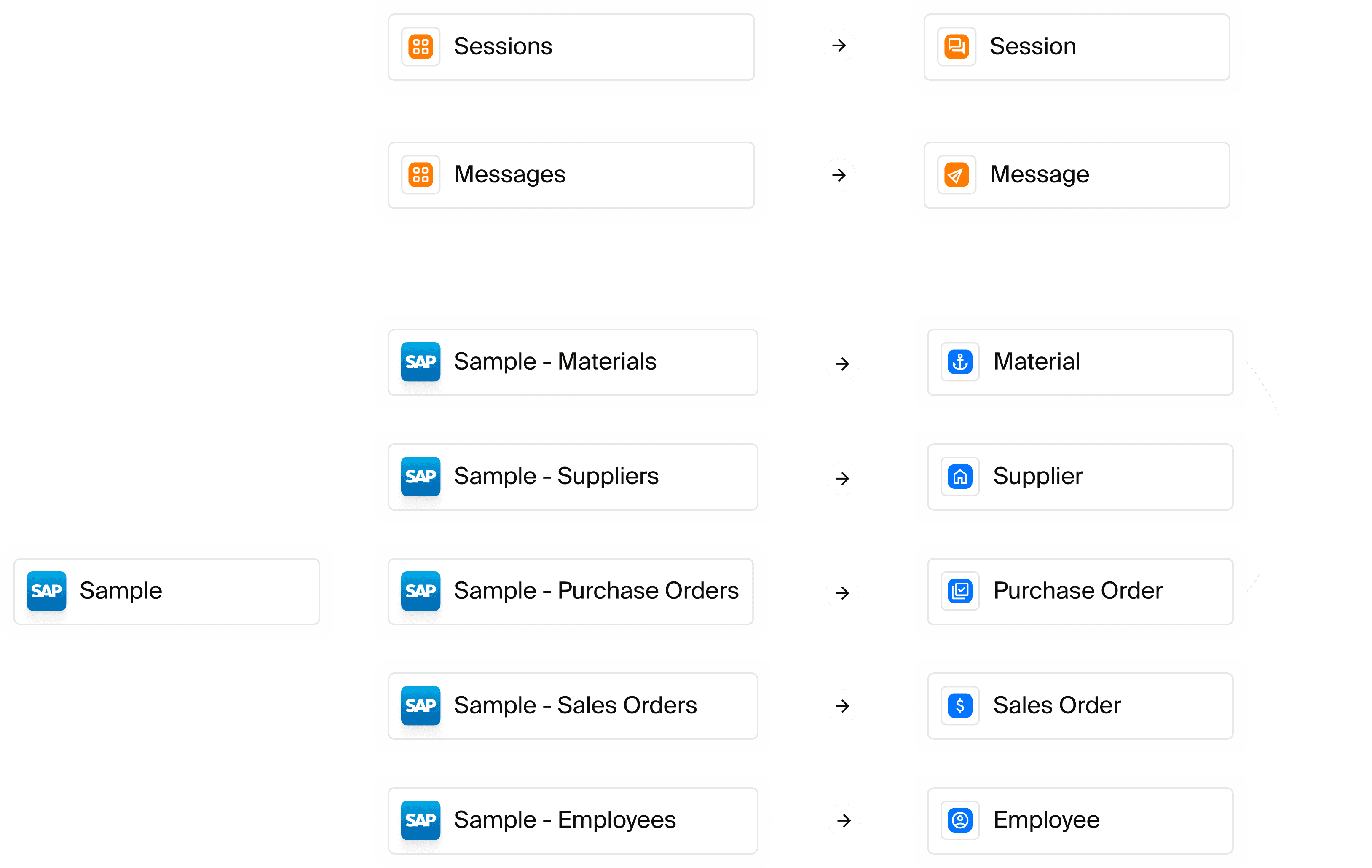
Every interaction your agents handle generates data that human workers never produced - not just what was said, but what was looked up, what was decided, what happened at every step of execution. Agentic data turns those agent actions into structured, queryable intelligence, defined and written automatically during execution, with no post-processing or manual review required.
Structured, connected data since extraction
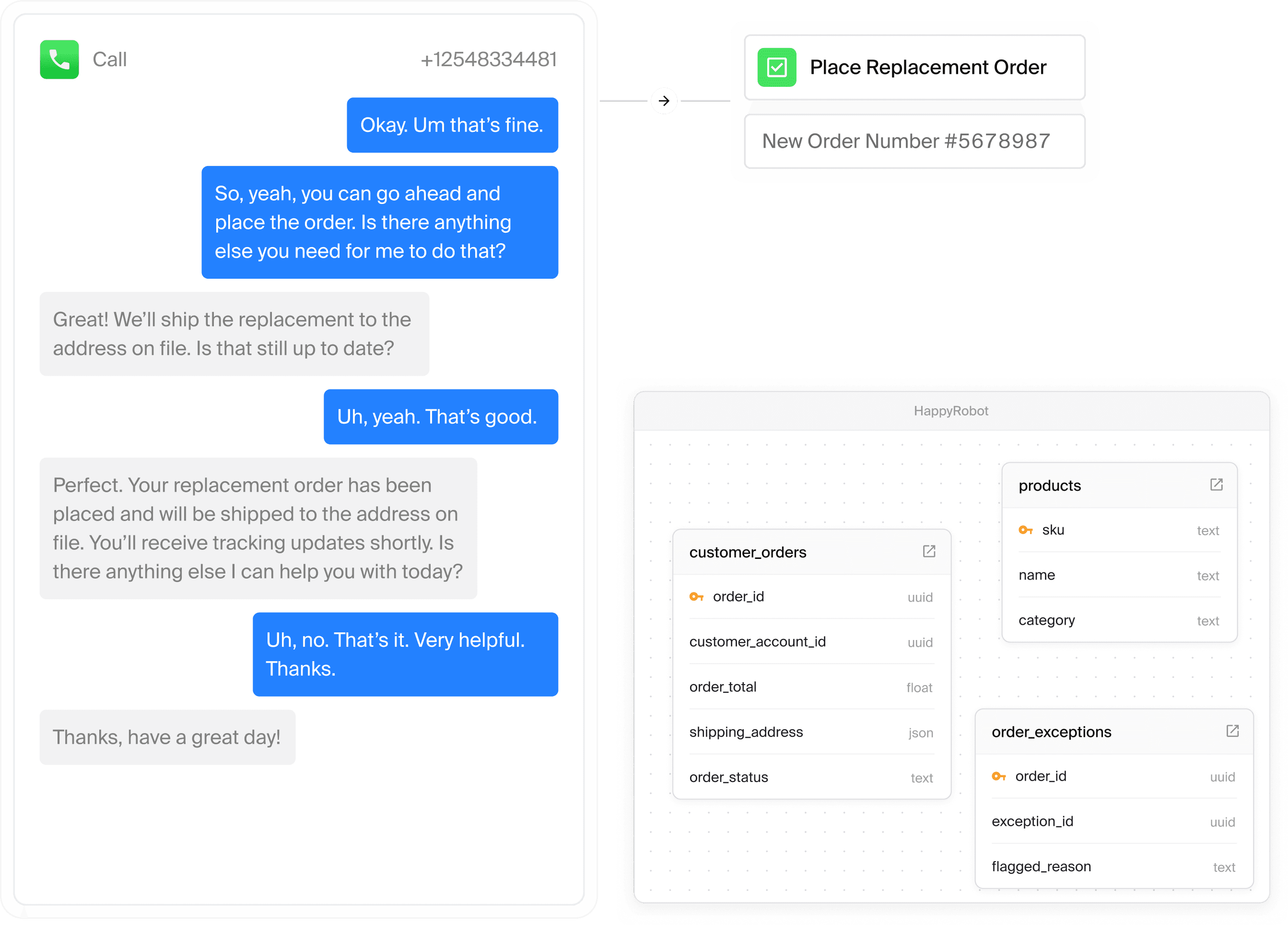
Custom variables
Beyond standard classifications like outcome, intent, and sentiment, workflows can define and capture any variable that matters to your operation like a quoted price, a document reference number, a compliance acknowledgment, and more.
Extraction rules per workflow
An inbound support workflow extracts resolution status and escalation reason. An outbound follow-up workflow extracts response, objection type, and next action. Each workflow defines its own extraction rules, and all output lands in the same data layer, structured consistently so it is comparable.
Entity mapping
Every data point captured is automatically mapped to the entity it belongs to, such as a contact, an account, a vendor, a product. The data layer builds a structured understanding of your operation's key entities over time rather than accumulating unattributed records.
Interaction data to actionable record
How memory snippets work
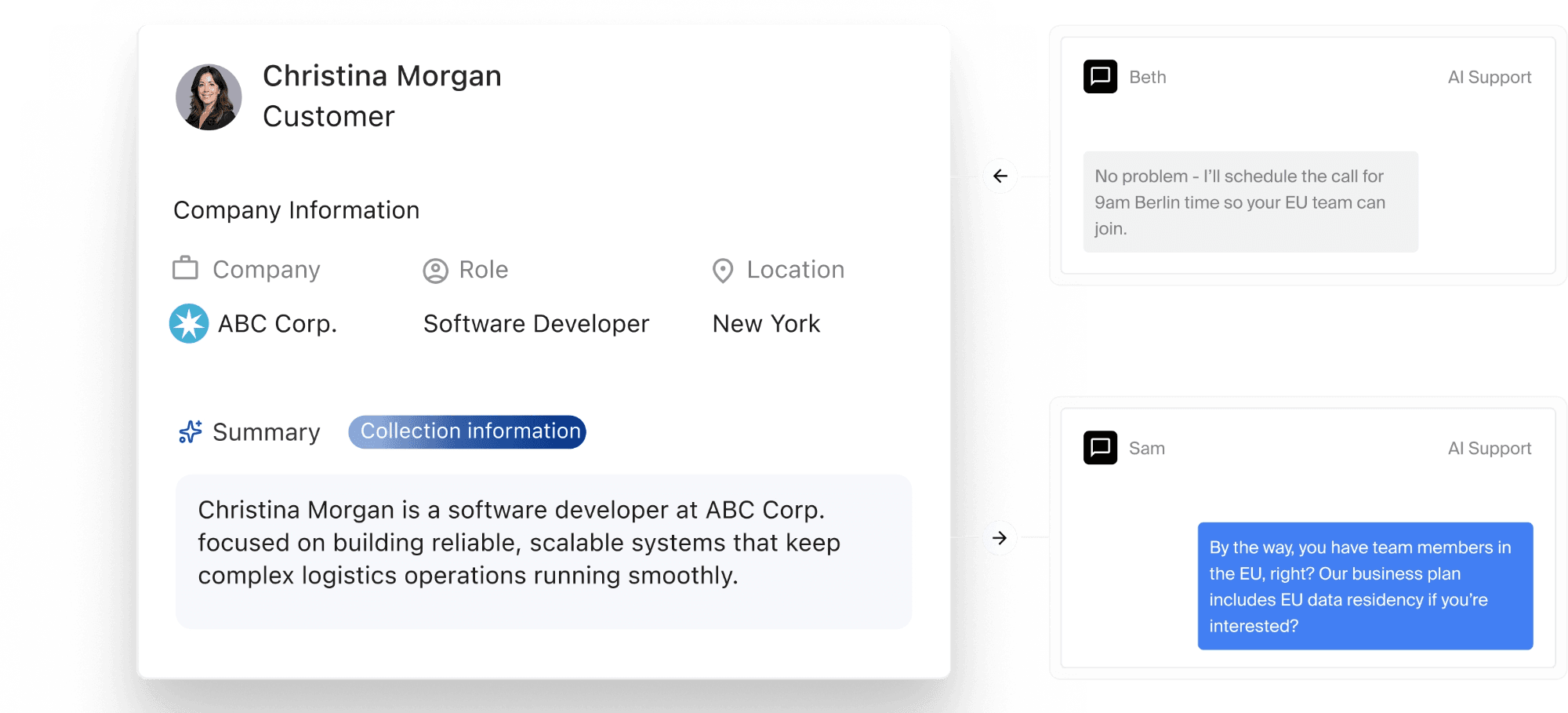
Memory snippets are structured summaries of past interactions, like what was actually discussed, resolved, or left open. They are written at the end of each session and indexed for retrieval. When the same contact returns, the agent surfaces relevant snippets for that context.
How behavioral tags are generated and used
Behavioral tags are derived from patterns across multiple interactions. An escalation history, a recurring contact reason, a consistent sentiment, and more. Agents use behavioral tags to adjust handling before a conversation begins and respond or route accordingly.
Identity resolution at the edges
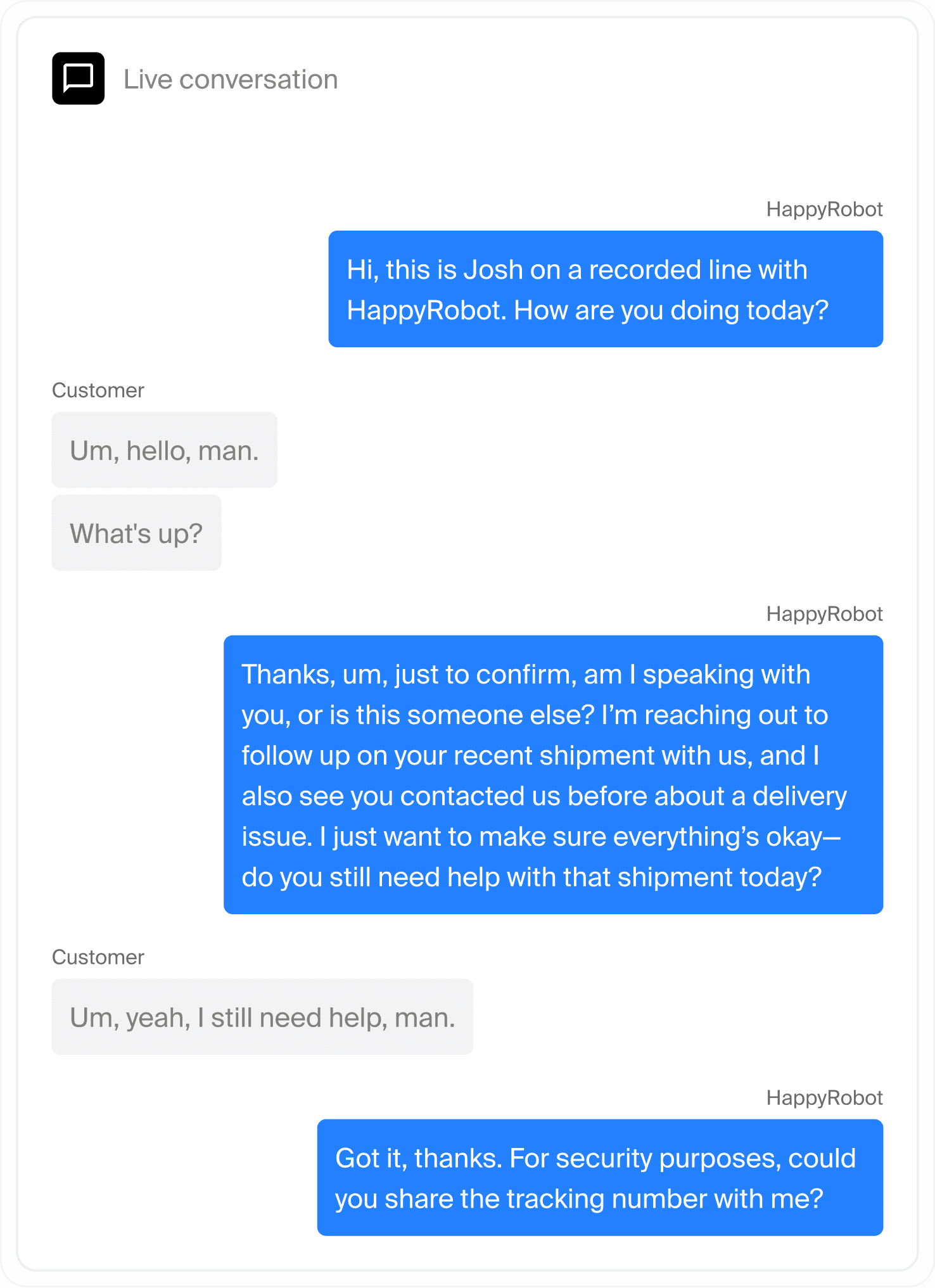
Phone number and email are the primary identity anchors, matching a caller to their existing record before the first word is spoken. Where neither is available, custom identifiers like a tracking number, an account ID etc. are used so interactions can still be mapped to the right contact.
Agents query Context mid-workflow
In-workflow queries
Agents can query the data layer during a live session, retrieving a value captured in a prior interaction, checking whether a condition has been met before, looking up what was discussed last time a contact called. Agents never treat returning customers as strangers.
Downstream workflow triggers
Data written to Context can trigger downstream workflows automatically - a captured escalation reason routing to a follow-up agent or a classified outcome initiating a CRM update. Context is an active data layer, so what gets captured in one interaction can set the next one in motion.
Data retention, access, and how it flows out of the platform
Configurable retention
Data retention periods are configurable per deployment. Transcripts, extracted fields, contact records, and session metadata can be retained for defined windows aligned to your regulatory and operational requirements and removed automatically when the retention period expires without manual intervention.
Tenant isolation
Every deployment's data is fully isolated. No data is shared across tenants, used to train shared models, or repurposed for any purpose outside the execution context it was captured in. What your agents capture stays within your deployment
Portability via REST API
The full data layer is accessible through the REST API and managed REST gateway, and is queryable by external BI tools, data lakes, analytics platforms, and operational dashboards. The data your agents generate is treated as a first-class organizational data source, exportable and integrable with your existing stack on your terms.