

"Happy Robot’s AI phone agent has enabled Encompass agents to engage more meaningfully with customers by handling routine inquiries, allowing human agents to focus on more complex interactions."
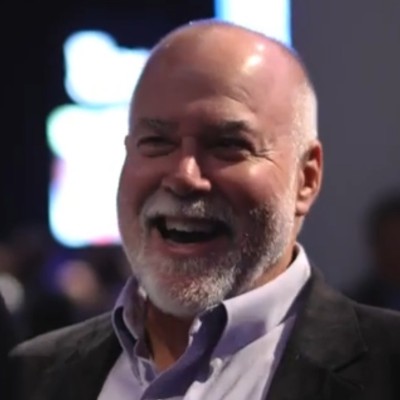
Vice President of Customer Support
Jim Scarff
About Encompass
Encompass Supply Chain Solutions is the largest supplier of original equipment manufacturer (OEM) replacement parts in North America. Founded in 1953 and headquartered in Lawrenceville, Georgia, the company has built a 70+ year track record as the go-to partner for home repair, managing a portfolio of hundreds of leading brands and carrying genuine OEM parts from a wide range of trusted manufacturers.
Encompass is the trusted referral for customers of major appliance and electronics brands when repairs are needed, supplying original replacement parts for nearly every home product: televisions, washers, dryers, dishwashers, stoves, refrigerators, HVAC systems, and more. Encompass maintains one of the industry's largest catalogs of OEM parts, with hundreds of thousands in active stock across distribution centers strategically located across the United States.
Opportunity
Customers primarily contact Encompass for price and availability, as well as order status, backorder ETAs, and cancellations. For years, these high-volume, time-sensitive inquiries required human agents.
Monthly tracking revealed that most inbound calls were transactional, repetitive, and easily addressed. Agents spent significant time on part-number lookups and order-status checks, tasks that could be automated with the right technology.
As Encompass grew and its brand portfolio expanded, it became clear the issue would not be resolved without intervention. Increasing staff was not a sustainable solution.
Solution
Encompass’s partnership with HappyRobot began after CEO Robert Coolidge attended a presentation by HappyRobot’s founder at The Breakers in West Palm Beach. Impressed by the conversational nature of the technology, which contrasted with traditional menu-driven systems, he shared the presentation with Jim Scarff, VP of Customer Support.
The team proceeded methodically, conducting demos, consulting with existing users, and evaluating alternatives. Miguel Rodriguez, an operations veteran with 20 years of contact center experience, was involved from the outset. The team unanimously agreed HappyRobot was the right partner. Success was measured by how many calls HappyRobot could handle without escalation to a human. As Brian Ecenarro, who leads customer service operations for the Parts Town Home Division, put it: "We determined success and failure by the amount of handoffs being made as escalations to live agents."
Encompass began with Midea, deliberately selecting it as a controlled environment to test the agent, refine logic, and build confidence before expanding to higher-volume lines. Customers could call with a model number, and the agent would return a list of compatible parts with real-time inventory and pricing. The concept was straightforward. The execution was anything but.
Encompass's alphanumeric model numbers are long, complex strings where a single transposed digit or misheard character produces a completely wrong result. No partial credit, no close enough. Every error resulted in a failed lookup, which triggered a transfer to a human agent, which counted as a failure. In an environment where the margin for error was effectively zero, the AI had to get it right every time.
Early versions of the voice agent struggled with this very issue. Initial LLM iterations sometimes confused visually or phonetically similar characters, a "B" for an "8," a "D" for a "T", silently returning the wrong part or no result at all. Solving it required deep, iterative collaboration between Federico, HappyRobot's forward-deployed engineer, and the Encompass team: refining transcription logic, building validation layers, and stress-testing edge cases until the agent could reliably handle the full range of model number formats Encompass sees in production.
The result speaks for itself. Operating in one of the most unforgiving data-capture environments in customer service, HappyRobot achieved a ~36% transfer rate, meaning roughly 64% of callers got what they needed without ever reaching a human. For a workflow where a single bad character ends the interaction, that's not just a good number. It's an exceptional one.
Impact
That success became the template. Encompass expanded to LG, a larger brand with significantly higher call volume, and HappyRobot now manages roughly 1,700 LG-related calls each week, resolving approximately 64% without human intervention. The underlying agent logic transfers across brands: identify the product, retrieve the part, confirm availability and pricing, and, where applicable, send an SMS link to complete the purchase. Each new brand gets its own configured agent without rebuilding the workflow from scratch.
Encompass uses a hybrid model. During business hours, calls for pricing, availability, order status, or cancellation are routed directly to HappyRobot from the Cisco IVR. If a customer requests to speak with a human, the call is transferred accordingly. After hours, self-service options remain available. If a callback is required, HappyRobot forwards the request to an agent for follow-up the next morning, ensuring every customer receives a response.
The Bigger Story
Encompass’s objective was not to automate a single use case, but to develop a scalable playbook. The team brought clarity from the start, having already tracked why customers called, which calls were highest-volume, and which workflows could be addressed via an API. When HappyRobot joined, Encompass already knew where to begin. That clarity accelerated the process.
The current goal is to extend this playbook to every brand in the Encompass portfolio.
The roadmap continues to expand alongside the technology. Returns, which are not yet automated, are under evaluation. As Brian noted, "The journey lent itself towards problem-solving. We began to engage more with the technology and realized we can do this even further down the line." The primary constraint is not the AI, but the APIs that provide the necessary data for each new use case. This remains both the bottleneck and the focus of the roadmap.
What's Next
As the multi-brand rollout nears completion, two primary goals are in focus: optimization and expansion. The first goal is optimization, ensuring consistent, benchmark-level performance across every active brand. The second is expansion, both in use cases and in companies. Conversations with sister organizations are already underway. What Encompass proves here, they prove for everyone watching. The chatbot, already included in the existing contract, adds another channel alongside voice, giving customers more ways to receive fast, brand-accurate answers.
Looking ahead, there is a version of this product where a customer describes their broken appliance, receives a part identified and priced in seconds, confirms availability, and receives a purchase link via SMS, all without speaking to a human unless they choose to. That version is not just a concept. At Encompass, it is largely already real.